Funding Opportunity Meets Responsibility: Preparing Schools for Animal Assisted Wellbeing Programs
Across Australia, there is a growing recognition of the importance of student wellbeing, engagement, and emotional development. In Victoria, this commitment has been reinforced through a significant government investment, with $4.8 million allocated between 2023 and 2025 to support schools in delivering wellbeing initiatives, including animal assisted programs.
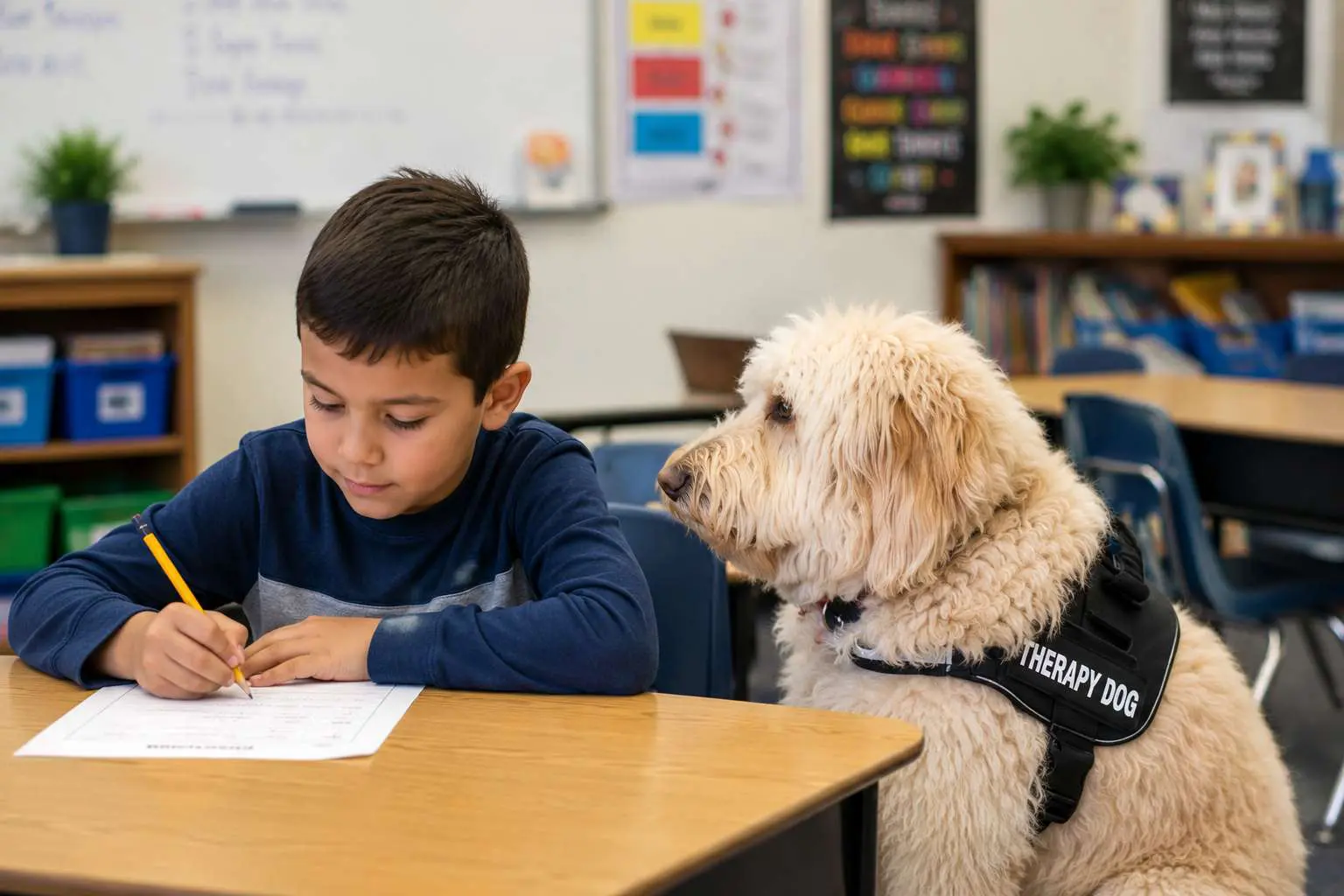
For many schools, this is an exciting opportunity. Animal assisted approaches, particularly those involving dogs, horses and other companion animals, have been shown to support emotional regulation, build confidence, and improve engagement for students who may struggle in traditional classroom settings. The appeal is clear. With funding now available, schools are understandably eager to explore how these programs can be introduced into their communities.
In some cases, schools have already secured or set aside this funding, recognising its value and wanting to ensure they do not miss the opportunity. Yet as the time comes to take the next step, many are finding themselves asking an important question: are we truly ready to deliver this well? Or, they may have already begun or be well under-way, and yet still not have their education staff actually trained in the specialist modality, services or scope of practice being provided, including animal assisted learning, animal assisted education (psychoeducation), equine assisted learning or equine assisted psychotherapy. There may keen teachers, educators, principles and staff, animals available, and yet the scope of practice required legally, professionally and ethically has not yet been achieved or has been slow to follow the roll-out of new initiatives and services.
Concerned?
The Gap Between Funding and Readiness
Government funding can accelerate implementation, but it does not automatically ensure training, planning and readiness. Educators are highly skilled professionals, however, they are not formally trained in animal assisted practice, unless they have completed external, specialist training. Animal Assisted learning and animal assisted psychotherapy (therapy) are specialist practice approaches with integrated elements of experiential learning, counselling micro-skills, psychology, relational practice, psychoeducation, animal science, animal behaviour, animal care, human-animal interaction skills including systematic assessment of regulation and stress behavioural indicators, and much, much more.
Introducing animals into a learning or therapeutic environment changes the dynamic significantly for all parties. It requires educators to determine learning goals and objectives, design appropriate human-animal interactions that meet those objectives, evaluate and assess outcomes, , interpret subtle animal behavioural cues, manage human-animal interactions carefully, and create safe, structured experiences that support each student’s individual needs, and the animal’s needs, consent and tendencies. It requires a significant commitment to specialise in animal assisted learning, oversea the services and provide for ongoing systemic, setting and contextual factors. Ethics becomes intrinsic from beginning to end for all human and animal wellbeing to be enriched and optomised.
There are broader considerations around duty of care. Schools must ensure that programs are delivered in a way that is ethically sound, developmentally appropriate, and aligned with best practice terminology and frameworks. This includes understanding the role of the animal as a sentient participant, not simply a tool or resource, and much more.
In the understandable eagerness to make use of available funding, these complexities can sometimes be underestimated.
Why Training Matters
Quality training equips educators with the knowledge and confidence to deliver meaningful outcomes, with ethics at its centre. It moves animal assisted work beyond novelty and into a purposeful, evidence informed practice that enriches the lives of all involved, all human social mammals and non-human social mammals.
Training in this space typically covers:
- Understanding trauma and its impact on learning and behaviour, for humans and animals
- Developing relational skills that support trust and safety, for humans and animals
- Tracking, assessing and Interpreting animal behaviour and ensuring ethical, welfare and consent-based standards are upheld, given animals are sentient beings not tools
- Structuring sessions that align with clear educational goals and clear evaluation processes
- Managing risk and maintaining professional boundaries
- Much, much more !
Importantly, it also helps educators to reflect on their own presence and role within the process. Animal assisted work is deeply relational. The effectiveness of the program is shaped not only by the animal and the student, but by the facilitator’s ability to hold the space with awareness and intention and a commitment to nervous state and psychological safety for all sentient beings involved.
Only well trained educators can turn funding into meaningful and ethical outcomes.
A Thoughtful Approach to Implementation
For schools considering how to make the most of current grant opportunities, a thoughtful approach is key. Rather than rushing to implement a program immediately, there is value in taking a step back and asking a few important questions:
- Are our staff adequately trained to deliver this work safely and effectively?
- Do we understand the ethical responsibilities involved in working with animals?
- How will we ensure consistency and quality across the program?
- What outcomes are we hoping to achieve for our students?
- What outcomes are we ensuring for our animals?
By addressing these questions early, schools can move from intention to capability. Funding that may currently be sitting aside can then be activated with confidence, supporting programs that are structured, safe, ethical, and impactful.
How EAAPI Can Support Schools
The Equine and Animal Assisted Psychotherapy Institute offers training designed specifically for professionals looking to integrate animal assisted approaches into their work. With a strong focus on trauma informed and relational practice, EAAPI supports educators to develop the depth of understanding required to work in this field with integrity. We offer an equine assisted learning pathway and an animal assisted learning pathway for those interested in including dogs, chickens and other animals into school programs.
Programs are aligned with recognised international professional terminology, standards and ethics, and provide practical, hands on learning alongside theoretical foundations. This ensures that participants are not only informed, but truly prepared to apply their skills in real world settings.
For schools, this means greater confidence in program delivery, improved outcomes for students, and a clear commitment to ethical practice.
Making the Most of the Opportunity
The Victorian Government’s $4.8 million investment represents a genuine opportunity to enhance the support available to students. Animal assisted programs can play a powerful role within this space when implemented thoughtfully and responsibly.
The goal is not simply to introduce these programs, but to ensure they are delivered well. With the right training in place, schools can move forward with confidence, knowing they are equipped to do the good work this funding was intended to support.
If your school is ready to take the next step, now is the time to build the right foundations.