Equine assisted psychotherapy and equine assisted
learning powered by Horse Wisdom
Across Australia, more people are discovering the profound ways horses can support emotional healing, self-awareness, and personal growth. While horses have long been companions in work and recreation, their role in Equine Assisted Psychotherapy (EAP) and in Equine Assisted Learning (EAL) brings a deeper, more transformative connection — one that’s both ancient and strikingly relevant to modern life.
At the Equine and Animal Assisted Psychotherapy Institute (EAAPI), founded by psychotherapist and horse lover Meg Kirby, the focus is on creating ethical, evidence-informed frameworks for humans and horses to connect in ways that foster healing for both. From the rolling hills of Daylesford to rural and urban settings across the country, practitioners trained by the Institute are witnessing the healing properties of horses combined with skilful facilitation.
The unique sensitivity of horses
Horses are prey animals — finely tuned to read the body language, tone, and energy of those around them. This sensitivity allows them to respond to human emotions and subtle human behaviour in the moment, offering powerful feedback without judgement. In a therapeutic or
learning environment, this creates opportunities for clients to gain immediate insight into their own emotional states and relational patterns. EAP and EAL student practitioners learn about the unique role of horses as change agents with Institute foundation training.
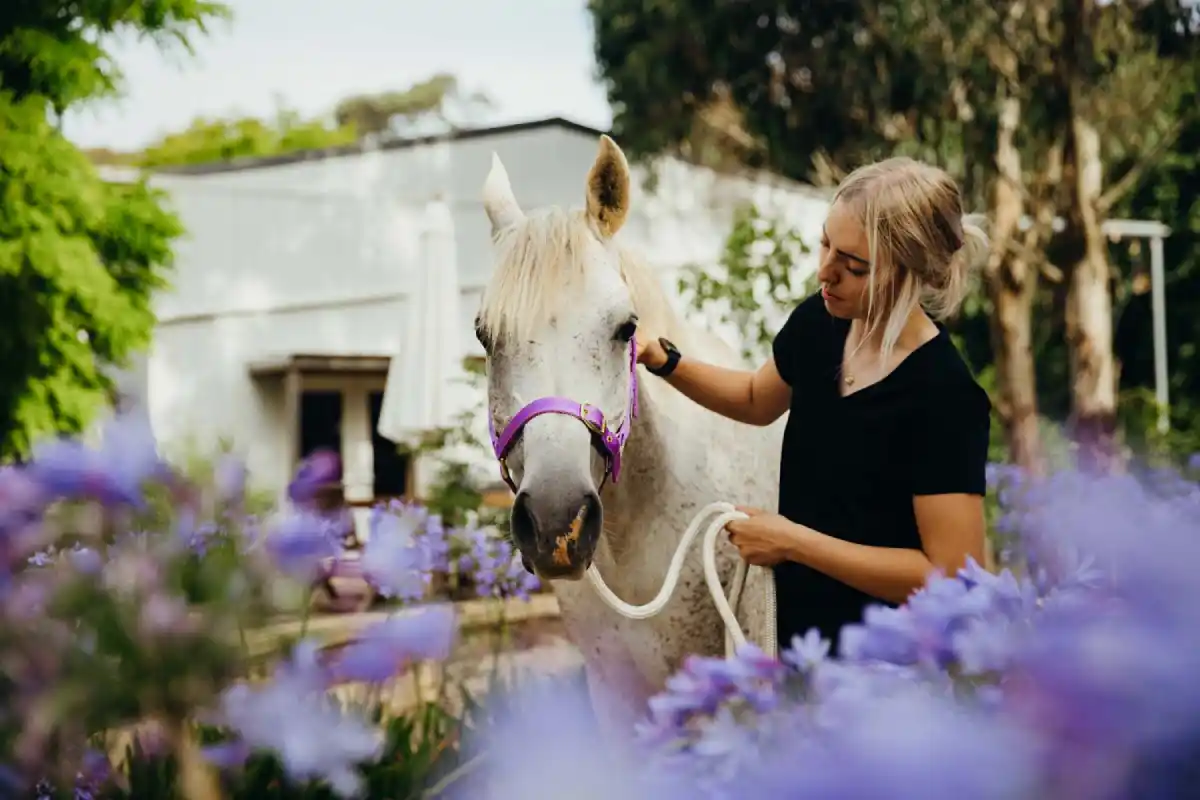
In Equine Assisted Psychotherapy, trained therapists and allied health professionals work alongside horses to support individuals navigating anxiety, depression, trauma, grief, or relational difficulties. The process isn’t about riding or training horses or using horses as tools — it’s about integrated knowledge, practice, presence, awareness, and mutual respect. Clients often describe the experience as grounding and freeing; a rare chance to connect with or without words, to be seen and accepted just as they are.
Learning through relationship
In Equine Assisted Learning, the focus is on developing social and emotional learning skills, emotional intelligence, communication, and resilience. Whether in youth programs, corporate leadership settings, or community initiatives, horses help participants and clients explore concepts such as trust, boundaries, teamwork, and empathy, experientially.
As Meg Kirby describes it, “Horses give us so many things including embodied feedback, co-regulation and safe relationship. They help people experience authentic connection – and that’s something we carry back into other relationships at home and at work.”
Ethics and welfare at the heart
A defining feature of the EAAPI approach is its emphasis on ethical, welfare-centred equine assisted practice. Horses and other animals incorporated in therapy and experiential learning are not tools or props; they are sentient partners who have agency and choice in every interaction. This philosophy is reshaping the landscape of equine assisted therapy in Australia, placing the wellbeing of both human and horse at the centre of the work.
Practitioners trained through EAAPI’s internationally recognised programs learn not only therapeutic and facilitation skills, but also how to ensure every interaction supports safety, consent, and mutual benefit. This depth of training has helped establish EAAPI as Australia’s leading organisation in the fields of both Equine Assisted Psychotherapy and Equine Assisted Learning, and Animal Assisted Psychotherapy where different species of animals are ethically included to support human growth and healing.
A path from disconnection to connection
In a world that often feels disconnected, horses can invite us to slow down, breathe, and truly be. They remind us that healing doesn’t always happen through words — sometimes it happens through quiet connection, shared space, and the gentle rhythm of hooves beside us.
To learn more about training, click here.